The maintenance desk · working file
An independent maintenance desk for durable content
Not an agency, not a course, not a growth-hack feed. One desk, one question: after AI answers the basics, which pages still deserve to exist — and what keeps them worth a click?
01 Why this exists
Most SEO advice ages badly, and after AI Overviews a lot of it aged overnight. Publishers are left guessing which posts to keep, cut, merge, or refresh — usually with a spreadsheet and a bad feeling. This site is the working manual for that decision, kept current so you don’t have to re-derive it.
02 Who it helps
Founders, operators, solo publishers, and content leads with an existing library and limited editorial time. If you have a hundred posts and one afternoon a month to maintain them, these guides are scoped to you.
03 Our publishing rule
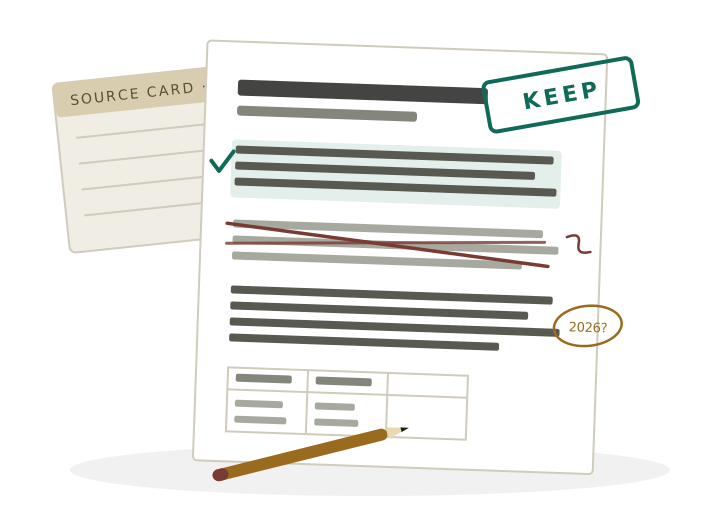
One rule, applied before anything ships: a guide must help you make a keep/cut/merge/refresh decision you couldn’t make from an AI summary alone. That means checks against live pages, dated facts, primary sources for anything about ranking systems, and a direct answer at the top. If a draft can’t clear that bar, it stays in the drawer.
04 What gets rejected
Some drafts don’t make it out of review. Recurring reasons:
- Promises of rankings, traffic numbers, or guaranteed outcomes.
- AI-panic takes and futurism with no decision attached.
- Vague thought leadership that survives an AI summary intact.
- Claims about search systems we can’t source or date.
- Keyword grabs outside the one topic this desk covers.
05 How a guide is maintained
Publishing is the start, not the end. Every guide carries a last-checked date and moves through the same loop:
- Drafted — written by AI from a brief that names the reader’s decision, against the publishing rule.
- Sourced — time-sensitive claims checked against primary sources and dated.
- Reviewed — a separate AI review checks search intent, facts, and reader value before anything is public. Drafts that fail it stay unpublished.
- Re-checked — pulled back when AI Overviews or SERP behaviour shift, then re-dated or revised.
- Cut or merged — when a guide stops earning its place, we apply our own rule to it.
The review badge and date on each guide are the honest state of that loop — not decoration. The site’s owner sets these rules and spot-checks published guides. No named experts, no invented credentials: trust the dates, the sources, and the visible method instead. If a guide is wrong or out of date, tell us — we check it against the primary source and, if the guide is wrong, fix it and re-date it.